Renewable and sustainable

When it comes to insulating a home, many people automatically look to getting the lowest U-value at the lowest thickness. This is understandable, and given that certain synthetic insulations are capable of achieving this, one could be forgiven for assuming they are being energy efficient in choosing them. However, in truth, many of these manmade synthetic fibres demand significant amounts of energy during their raw material sourcing and production. Natural insulations, on the other hand, tend to have lower environmental impact during sourcing and production, and are sustainable by their nature. Gutex wood fibre, for example, is crafted from untreated post-industrial wood chips and shavings which are sourced as by-products from nearby sawmills. These are finely ground and processed into wood fibre boards, flexible batts, or loose fibre. Using a natural insulation like wood fibre not only promotes the responsible use of natural resources, but reduces carbon emissions too.
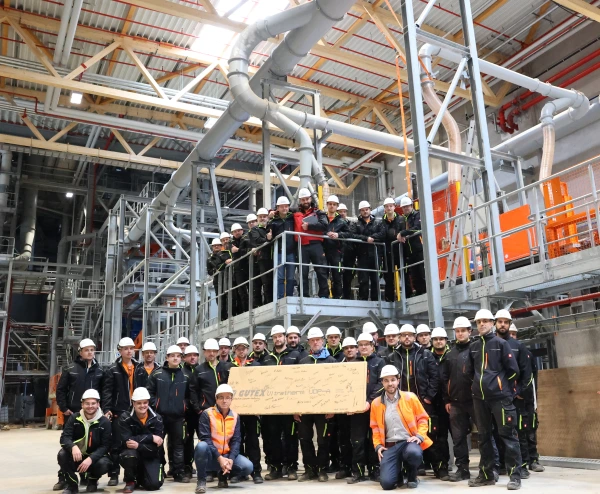
The first wood fibre insulation board produced at the new Gutex production plant near the Black Forest in Germany.

Carbon and the environment

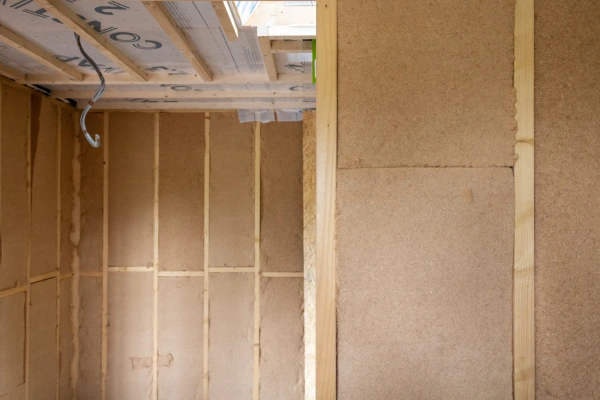
Gutex Thermoflex flexible wood fibre insulation mats fitted between stud walls on a low-energy newbuild

According to the World Green Building Council (WGBC), building and construction activities are responsible for nearly 39% of global carbon emissions. With the global building stock expected to double in size by the middle of this century, achieving ‘Net Zero’ by 2050 poses a significant challenge. Net Zero entails ensuring that the total greenhouse gas emissions from all sources over the lifecycle of a project amount to zero or less, and is a central goal of the WGBC. Getting to Net Zero won't be easy and will demand strategies that optimise existing buildings, prioritise low-carbon materials and designs, and employ energy-efficient construction methods. One promising solution is the use of bio-based building materials. Wood fibre, along with other natural fibre insulations, offers substantially lower embodied carbon compared to synthetic alternatives and can play a crucial role in emission reduction.

Regulating indoor temperatures

One of the core benefits of wood fibre insulation is its low ‘thermal conductivity’. Thermal conductivity refers to a material’s ability to resist heat flow, with lower values correlating to better insulation performance. The thermal conductivity of wood fibre typically ranges from approximately 0.036 to 0.045 W/mK – far lower than many synthetic insulating materials. Wood fibre, therefore, is more effective at impeding the movement of heat trying to escape from a warm interior during the winter months, or infiltrating a cool interior during the summer. Consequently, wood fibre helps maintain a more stable indoor temperature and reduces the reliance on mechanical heating and cooling systems.

In addition to this, wood fibre insulation exhibits a notable ‘thermal mass effect’. This refers to a material’s capacity to absorb, store, and slowly release heat over time. Wood fibre insulation is excellent at storing heat, which helps regulate indoor temperatures by smoothing out fluctuations in external conditions. During periods of hot weather, wood fibre insulation absorbs excess heat and prevents temperature spikes within the building. Conversely, during cooler periods, wood fibre gradually releases stored heat and helps maintain a comfortable indoor environment.

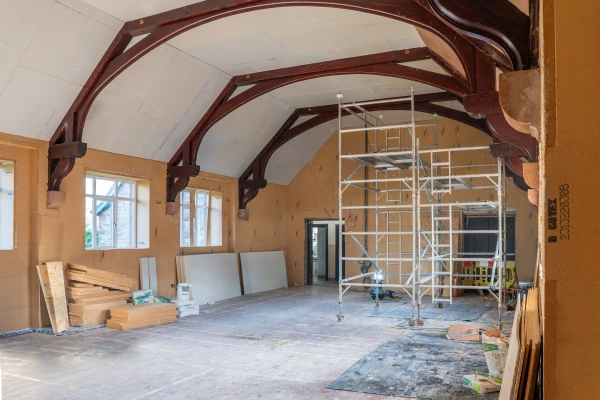
Gutex Thermoroom internal wall insulation boards used in the refurbishment of a parish hall

Breathability and acoustic performance

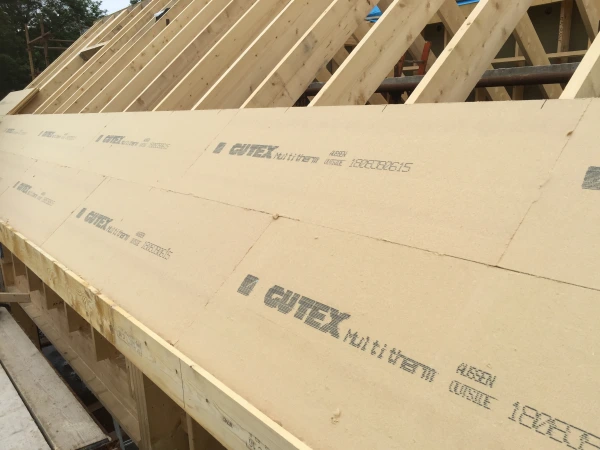
Gutex Multitherm T&G external insulation board used on the roof of a low-energy build

The breathability of insulating materials is vital when it comes to preventing condensation and maintaining optimal humidity levels in buildings. If moisture were to penetrate the roof of a building, for example, and was not able to dry out quickly enough, this could lead to long-term structural, durability and health issues. In such a case, roofs which are covered externally with an impermeable membrane, or insulation with high vapour resistance (like foil-faced rigid insulation), are particularly at risk, as the passage of vapour to the outside is restricted. Opting for breathable wood fibre insulation offers better protection against moisture build-up throughout the building's lifespan.

Moreover, wood fibre insulation also has exceptional acoustic properties due to its dense and fibrous composition. It effectively reduces airborne noise transmission, making it suitable for both commercial buildings and residential projects. 

Product versatility

Wood fibre has been utilised in buildings for centuries in the form of shavings or chippings. On an industrial level, Gutex wood fibre boasts over 90 years of history, having been in operation since 1932. While its history spans almost a century, the production technology and solutions have continually evolved to adapt to changing building standards and methods. For instance, Gutex wood fibre insulation exists in board, flexible batt, or loose fibre formats. Some examples of these include:

  • Gutex Multiplex Top: a wood fibre board with a watertight and windtight profile, which is typically applied externally on roofs or walls.
  • Gutex Thermoflex: a high-density flexible wood fibre batt used between joists, rafters, or studs.
  • Gutex Thermofibre: a loose wood fibre insulation, often machine-applied into cavities between studs, rafters, or joists, particularly in challenging or irregular spaces.
  • Gutex Thermoroom: a rigid insulation board fitted on the internal side of solid masonry external walls.
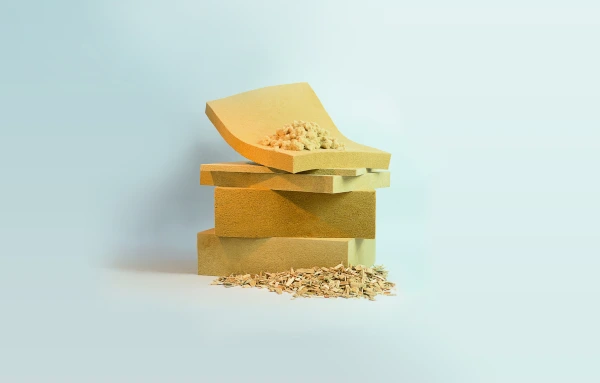
Various thicknesses of Gutex wood fibre insulation mats

Wood fibre insulation offers numerous benefits for those committed to sustainable and eco-friendly buildings. Being a renewable and sustainable product capable of sequestering embodied carbon, it will play a pivotal role in helping achieve the objectives set by the WGBC. Additionally, wood fibre’s ability to regulate indoor temperatures further contributes to energy efficiency in buildings by reducing the reliance on mechanical heating and cooling systems. As we advance towards Net Zero, ‘going green’ with wood fibre insulation is an obvious choice for those looking to play their part in contributing towards a more sustainable future.